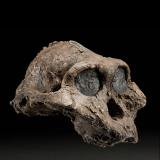
Nutcracker Man

Paranthropus boisei

Background

Date range: 2.3 - 1.2 million years ago 
Homeland: Tanzania, Kenya, Malawi, Ethiopia (Eastern Africa)
Diet: Very tough and abrasive food; nuts and roots; dental micro wear indicate fruit was also common food 
Cranial Capacity: 520 cc
Habitat: Grasslands close to wet habitats like lakes and rivers
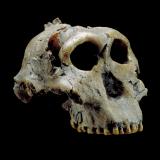
Distinguishing Features: prominent sagittal crest indicating strong chewing muscles for heavy chewing; wide and dish shaped face; very large teeth (four times the size of humans); sexual dimorphism present; heavier body size than australopithecine relatives; full bipedality (spine attaches at bottom of skull); unrefined pelvis (limited striding gait)
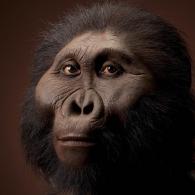
Do you think the Nutcracker Man
will be the survivor?

This hominid species is puzzling because its huge teeth and chewing muscles would seem to indicate a predominantly abrasive diet, which is why it was originally called Nutcracker Man, but the dental wear on the teeth correlates more with a fruit based diet. 

Important fossils belonging to this contestant:

OH 5 - discovered in 1959 in Olduvai Gorge; type fossil for the species; originally called "Zinjanthropus boisei"

KNM-ER 406 - mostly complete male skull;prominent sagittal crest is visible as well as the wide face

Works referenced: 
http://humanorigins.si.edu/evidence/human-fossils/species/paranthropus-boisei
http://australianmuseum.net.au/paranthropus-species

Photo sources: 
http://humanorigins.si.edu/evidence/human-fossils/species/paranthropus-boisei