Background
Date range: 3.3 - 2.1 million years ago
Homeland: Southern Africa
Diet: Mostly plant based, including fruit, nuts, plants, seeds, roots, insects and eggs; rarely meat (likely would scavenge)
Cranial Capacity: 480 cc
Habitat: Grasslands, woodlands, close to lakes
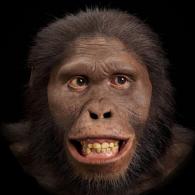
Distinguishing Features: round cranium with larger brain than ancestors; pronounced ape like jaw with relatively large premolar and molar teeth but reduced canine size (rare diastema observed); long limbs and curved fingers; smaller brow ridge and slightly arched forehead; sexualdimorphism present; fully bipedal but not specialized for a striding gait;
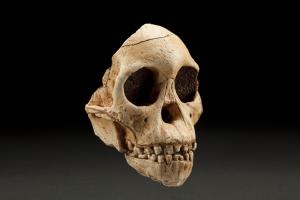
The Taung Child was one of the earliest fossils found to support ideas of human evolution from a primitive, ape like ancestor. The fossil was discovered in 1924 by Raymond Dart but was not widely accepted as a human ancestor for several years. While the Taung child would be fully bipedal, he has a narrower pelvis which limits his ability to have a full striding gait, hurting his chances for survival.
Other important fossils belonging to this contestant:
Taung Child - approximately 3 year old child's skull; mostly complete face.

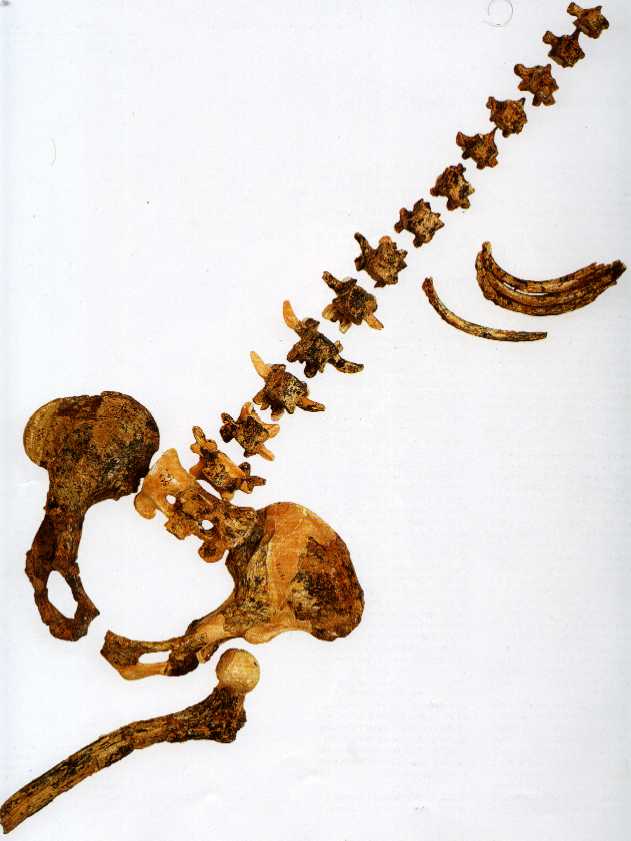
Sts 14 - partial skeleton found in South Africa; six lumber vertebrae present in lower spine (human like trait)

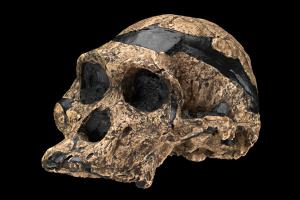
Sts 5 - 'Mrs. Ples'; 2.5 million year old skull, mostly complete, found in South Africa

Works referenced:
http://humanorigins.si.edu/evidence/human-fossils/species/australopithecus-africanus
http://australianmuseum.net.au/australopithecus-africanus
Photo sources:
http://humanorigins.si.edu/evidence/human-fossils/species/australopithecus-africanus
http://humanorigins.si.edu/evidence/human-fossils/fossils/taung-child
http://www.modernhumanorigins.net/sts14.html