Background
Date range: 3.85 - 2.95 million years ago
Homeland: Ethiopia, Kenya, and Tanzania (Eastern Africa)
Diet: Mostly plant based, including leaves, fruit, seeds, roots, nuts), some small vertebrates and insects
Cranial Capacity: 430 cc
Habitat: Wooded, humid environment, lived both arboreally and on the ground
Distinguishing Features: apelike face, projecting lower jaw and prominent brow ridge; curved fingers; bipedal locomotion; small canines; great sexual dimorphism (males significantly larger); larger brain size; relatively short juvenile maturation period; hyoid bone suggests a chimp like voice; small diastema present; non opposable big toes and arches in feet
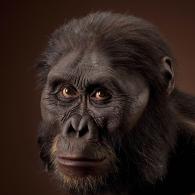
She's definitely a contender as her increased brain size and more full bipedality increases her chances in the competition. Fossil prints of foot steps in Laetoli are attributed to Lucy's species and demonstrate that the species was fully bipedal. Au. afarensis was one of the most common and longest lasting species, surviving for at least 900,000 years. But will she make it through our Survivor episode?
Other important fossils belonging to this contestant:
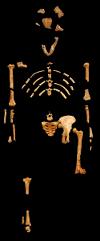
Lucy - AL 288-1 - most complete skeleton discovered; found in Ethiopia

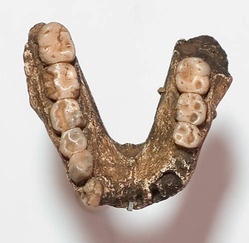
LH 4 - a jaw found in Tanzania; determined to be the type fossil for the species

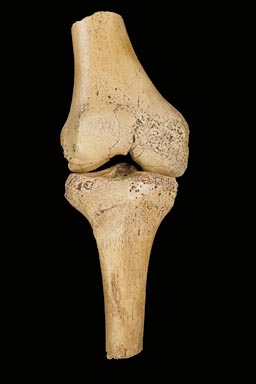
Knee AL 129 1a + 1b - one of the earliest fossils discovered that provided strong evidence for bipedalism in early ancestors; dated to over 3 million years old

Works referenced:
http://humanorigins.si.edu/evidence/human-fossils/species/australopithecus-afarensis
http://australianmuseum.net.au/australopithecus-afarensis
Photo sources:
http://humanorigins.si.edu/evidence/human-fossils/species/australopithecus-afarensis
http://en.academic.ru/pictures/enwiki/76/Lucy_blackbg.jpg
http://b01.deliver.odai.yale.edu/07/f6/07f69ca6-5234-4339-90fe-d3ff6ef418ed/268015-sm.jpg
http://upload.wikimedia.org/wikipedia/en/5/5c/Al129knee.jpg